
Slipped disc and sciatica
A slipped disc is one of the most common causes of pain running down the leg or arm. It is painful, but most people recover without surgery. This page explains what to expect, when to see a specialist, and what treatment involves.
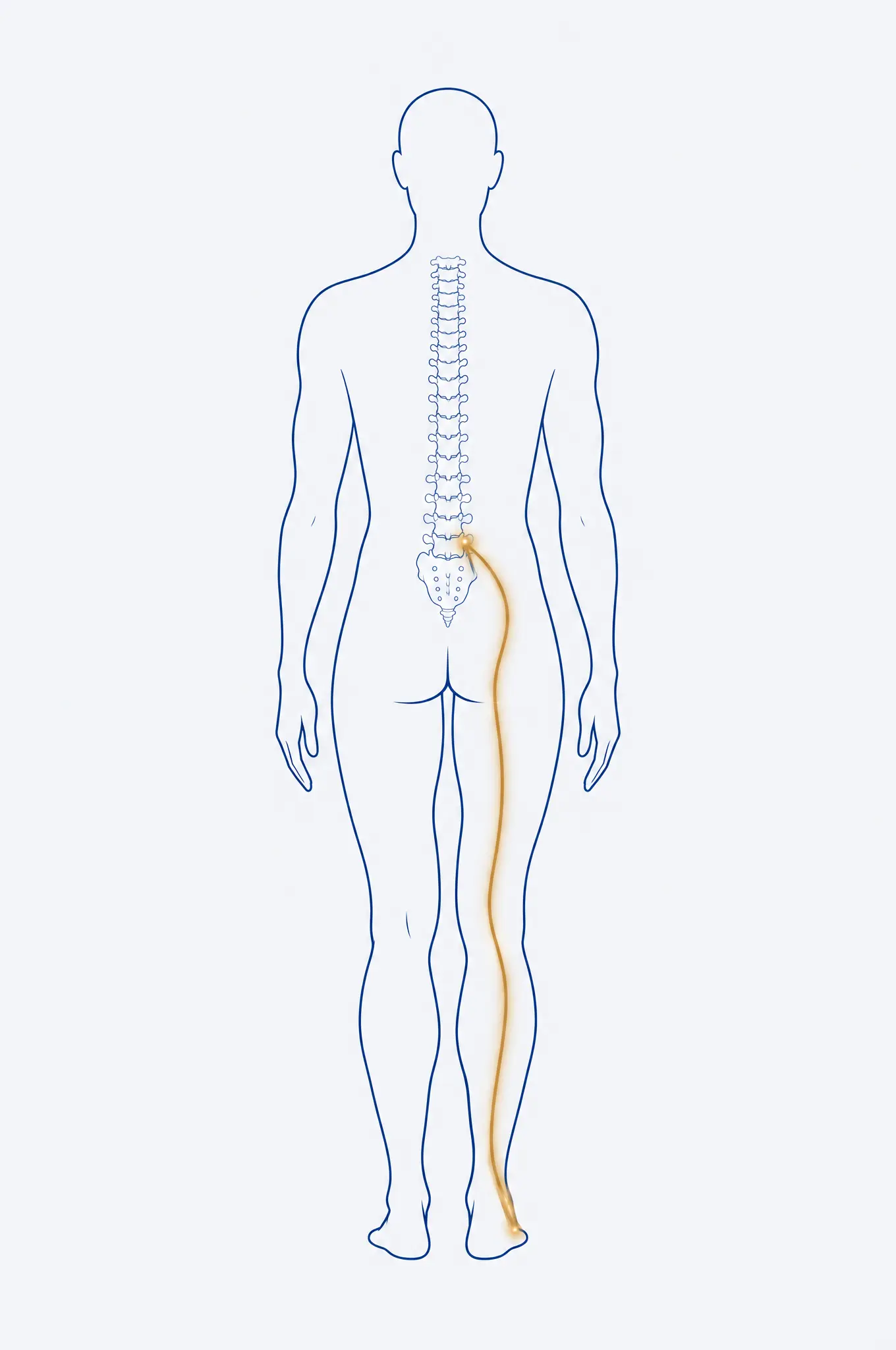
What a slipped disc is
The discs between the bones of your spine have a tough outer layer and a softer centre. A slipped disc, also called a prolapsed or herniated disc, is when part of that centre pushes out and presses on a nearby nerve.
In the lower back, this causes sciatica: pain that travels through the buttock and down the leg. In the neck, the pain travels down the arm.
Typical signs
- Leg pain that is worse than the back pain
- Pain that travels below the knee, sometimes into the foot
- Numbness or pins and needles in the leg or foot
- Pain made worse by sitting, bending, coughing or sneezing
- From the neck: pain or tingling running down the arm into the hand
Numbness around the groin or buttocks, new difficulty passing urine, loss of bowel control, or weakness in both legs needs emergency care. Go to the nearest Emergency Department straight away.
What usually happens
Most slipped discs settle with time, because the body gradually reabsorbs the part of the disc pressing on the nerve. Knowing the usual course helps you judge when to wait and when to get help.
First few days
Often the worst
Keep moving as much as the pain allows. Long periods of bed rest tend to slow recovery. Simple pain relief helps you stay active.
Up to 6 weeks
Steady improvement
For most people the leg pain eases week by week. Physiotherapy can help you move with confidence.
6 to 12 weeks
Time for a review
If the leg pain is still limiting your work, sleep or walking, see a spine specialist. This is usually when an MRI is done.
Beyond 12 weeks
Less likely to settle alone
Pain that has lasted this long is less likely to go away on its own. Injections or surgery are usually discussed at this stage.
When to see a specialist sooner
You do not need to wait six weeks if any of these apply.
- Weakness in the leg or foot, such as tripping or a foot that slaps when you walk
- Numbness that is spreading
- Pain severe enough that you cannot sleep or work, even with pain relief
- Sciatica that keeps coming back
- You have been told you need surgery and want another view
Treatment options
Treatment starts with the simplest option that works for you. Each step is considered only if the one before has not been enough.
| Option | What it involves | When it is considered |
|---|---|---|
| Staying active, pain relief and physiotherapy | Medication to control pain, and guided exercise to keep you moving | First, for almost everyone |
| Nerve root injection | A steroid and local anaesthetic placed beside the irritated nerve, guided by imaging | When leg pain is not settling, to ease it while the disc recovers |
| Endoscopic discectomy | Removing the disc fragment through a small port, using a camera | When pain persists or there is weakness, and the disc position suits this approach |
| Microdiscectomy | Removing the disc fragment through a small incision, using an operating microscope | When pain persists or there is weakness, and an endoscopic approach is not suitable |
Surgery or waiting?
Surgery usually relieves leg pain sooner. A year later, people who had surgery and people who did not often report similar results. So unless there is nerve weakness, the decision rests on how much the pain is affecting your life now, and we will talk it through with you.
Questions
What patients most often ask about a slipped disc.
Can a slipped disc go back in?
It is not pushed back into place. Instead, the part pressing on the nerve often shrinks over weeks to months as the body reabsorbs it, which is why most people improve without surgery.
Should I rest in bed?
A day or two of rest when the pain is severe is fine. Beyond that, staying gently active is better for recovery than bed rest.
Do I need an MRI?
Not always in the first few weeks. An MRI is needed if the pain is not settling, if there is weakness, or if injections or surgery are being considered.
Can it come back after surgery?
It can. A small proportion of people have another disc prolapse at the same level. We will talk through your own risk and how to reduce it.
How long is the MC after surgery?
It depends on the operation and the kind of work you do. Many people go back to office work within a few weeks. Jobs that involve lifting, driving long hours or standing all day take longer. We will tell you how much medical leave to expect before you decide, and issue the MC you need.
Leg pain not settling?
Message us and we will arrange a review with our spine team.